

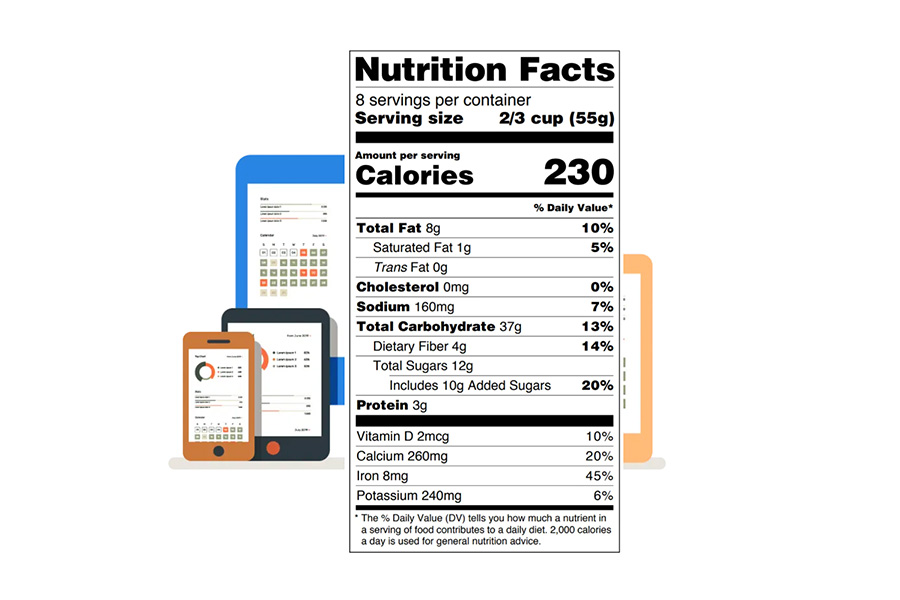
Understanding what we eat has never been more important. Whether you’re a health-conscious individual tracking your nutritional intake, a food entrepreneur building a business, or a nutrition professional serving clients, accurate nutritional information is essential. The tools we use to analyze and present this information have evolved dramatically, moving from expensive professional services to accessible digital solutions. Today’s nutrition label generators represent a technological leap forward, and FreeFoodLabels.com stands at the forefront of this transformation.
Why Nutrition Labels Matter for Health and Business
Nutrition labels serve dual purposes that often intersect. For consumers managing their health, these labels provide critical information for making informed dietary choices. Someone managing diabetes needs to monitor carbohydrate intake. Athletes optimizing performance need to track protein consumption. Individuals with heart conditions must watch sodium and saturated fats. Accurate nutrition labels make these health management strategies possible.
For food businesses, nutrition labels are equally vital but for different reasons. They’re legally required for most packaged foods, essential for building customer trust, and increasingly important for accessing retail distribution channels. A cottage food producer selling homemade granola bars at farmers markets may start voluntarily including nutrition labels to answer customer questions about sugar content, only to discover that these labels open doors to retail partnerships previously unavailable.
The challenge has always been obtaining accurate nutritional information affordably. Laboratory testing costs hundreds of dollars per product. Hiring nutritionists for recipe analysis adds up quickly. These expenses create barriers for small producers and make nutritional awareness programs inaccessible for many health-focused individuals.
How Traditional Food Label Generators Fall Short
First-generation nutrition label generators addressed part of this problem by making label formatting accessible. Instead of hiring graphic designers familiar with FDA requirements, users could input nutritional values and generate compliant labels. This was progress, but it left a critical gap: where did those nutritional values come from?
Most conventional food label generators require manual entry of nutritional data. You must obtain calories, protein, fat, carbohydrates, and dozens of other values from external sources before you can create your label. For health-conscious home cooks analyzing family recipes, this means using separate nutrition calculators, recording values, and manually entering them into the label generator. For food businesses, it means paying for laboratory testing or nutritionist consultations before the label generator becomes useful.
This disconnected approach creates several problems. First, it’s time-consuming and cumbersome, discouraging the recipe experimentation that leads to healthier, better products. Second, it increases error risk—transcription mistakes when copying data between systems can result in inaccurate nutrition information. Third, it makes iteration impractical. Want to see if reducing sugar by 20% improves your recipe’s health profile? With traditional food label generators, you must recalculate everything externally before you can update your label.
The Integrated Approach: FreeFoodLabels.com
FreeFoodLabels.com reimagines what a nutrition label generator should be. Rather than treating label creation as an isolated final step, it integrates nutritional calculation, recipe development, and cost analysis into a unified platform that serves both health and business needs.
Starting with Recipes, Not Just Numbers
The fundamental difference is that FreeFoodLabels.com calculates nutritional values directly from recipe ingredients. When you build a recipe—whether it’s a family dinner or a product for your food business—you input each ingredient and quantity. The platform’s comprehensive database, drawing from USDA nutritional data, automatically calculates the complete nutritional profile.
For someone focused on personal health, this means analyzing home recipes without separate calculation tools. Enter your homemade vegetable soup recipe with exact ingredient quantities, and instantly see the sodium, fiber, vitamin, and calorie content per serving. No more guessing whether your “healthy” smoothie actually contains 400 or 800 calories.
For food businesses, this integration transforms product development. A baker developing protein-enriched muffins can experiment with different flour types, protein powder quantities, and sweetener options, watching the nutrition label update in real time as ingredients change.
Real-Time Analysis for Health-Focused Recipe Development
The real power emerges in real-time nutritional feedback during recipe creation. This capability benefits both health management and food business development in profound ways.
Someone following a low-sodium diet for heart health can reformulate favorite recipes while monitoring sodium content continuously. As you reduce salt, add potassium-based substitutes, and increase herbs for flavor, you see immediately how these changes affect sodium levels. You’re not working blindly, hoping your modifications help—you’re making data-informed decisions about your health.
For food entrepreneurs, this real-time analysis enables strategic product development. Launching a line of diabetic-friendly baked goods requires careful sugar management. With FreeFoodLabels.com, you can experiment with sugar alcohols, alternative sweeteners, and increased fiber, watching how each modification affects the nutritional profile. The ingredient-level breakdown shows exactly which components contribute the most sugar, enabling targeted substitutions.
This is particularly valuable for developing products targeting specific health-focused markets. The keto diet requires precise carbohydrate monitoring. Plant-based athletes need high protein content from non-animal sources. Heart-healthy products demand optimized fatty acid profiles. FreeFoodLabels.com’s real-time analysis makes formulating for these specific health goals practical and precise.
Professional Results, Zero Cost
FreeFoodLabels.com lets you create professional level labels for free—a crucial distinction in a market where nutrition label generators often charge $20 to $100 monthly. This accessibility matters for multiple reasons.
For individuals managing health conditions or pursuing fitness goals, free access to professional-grade nutritional analysis tools democratizes health management. You don’t need disposable income to understand what you’re eating. Parents teaching children about nutrition can analyze school lunches and family meals without subscription fees.
For aspiring food entrepreneurs and small producers, eliminating cost barriers enables business creation. A home baker testing whether their healthy cookie concept could become a business can develop and analyze dozens of recipes without financial investment. Students exploring food science careers can learn using professional tools rather than simplified educational versions.
The “free labels and tools” aspect isn’t just about basic features—every capability is available without charge. Recipe calculation, cost analysis, professional label templates, and unlimited recipe storage don’t require premium upgrades. This comprehensiveness sets FreeFoodLabels.com apart from freemium competitors that restrict essential features behind paywalls.
Bridging Health and Business: Integrated Cost Analysis
A unique feature that connects health and business considerations is FreeFoodLabels.com’s integrated cost analysis. While this might seem purely business-focused, it has important health implications.
The platform tracks ingredient costs, packaging, labor, and overhead while simultaneously calculating nutritional values. This integration reveals the economics of healthy eating and healthy product development.
For individuals, analyzing recipe costs alongside nutrition promotes sustainable healthy eating. That elaborate superfood smoothie might be nutritionally excellent, but if it costs $12 per serving, it’s not sustainable for most budgets. FreeFoodLabels.com helps you find the sweet spot where nutrition and affordability intersect—perhaps flax seeds provide similar omega-3 benefits to chia seeds at half the cost.
For food businesses, this integrated view solves a critical challenge: developing products that are both nutritionally excellent and economically viable. A producer creating heart-healthy granola can see whether premium nuts improve the fatty acid profile enough to justify their higher cost, or whether a blend of premium and standard nuts achieves similar nutritional benefits at sustainable pricing.
The ability to reverse-engineer recipes to hit both nutritional and cost targets is powerful. If you need a high-protein snack bar that retails for $3 while delivering 15 grams of protein, you can experiment with different protein sources and ingredient combinations until you find formulations meeting both criteria.
Professional Foundation from Food Industry Experts
FreeFoodLabels.com’s sophisticated capabilities reflect its origins as an outgrowth of Blueberry Pie (hotblueberrypie.com), a Manufacturing Resource Planning system designed for commercial food manufacturers. This professional foundation ensures the platform delivers results meeting the exacting standards required by regulatory agencies and health professionals.
This matters for everyone using the platform. Health-conscious individuals get the same precise nutritional analysis that commercial food companies use for regulatory compliance. Nutritionists and dietitians can trust the calculations when developing meal plans for clients. Food businesses know their nutrition labels will meet FDA requirements without expensive consultant verification.
The professional origins also mean FreeFoodLabels.com serves an unusually broad user base effectively. The same platform helps a parent analyze their child’s lunch nutrition, enables a nutrition student to learn professional recipe analysis, allows a cottage food baker to develop compliant product labels, and supports a nutritionist in creating detailed meal plans for diabetic clients.
Practical Applications Across Health and Business
The versatility of FreeFoodLabels.com becomes clear when examining real-world applications across the health and business spectrum.
Personal Health Management:
Someone diagnosed with hypertension uses the platform to reformulate family recipes for lower sodium. By analyzing traditional favorites and testing ingredient modifications, they create healthier versions that family members actually enjoy, making long-term dietary changes sustainable.
Nutrition Education:
A high school health teacher uses FreeFoodLabels.com to teach students about nutrition. Students analyze fast food items by recreating recipes, discovering why certain meals contain surprisingly high sodium or sugar. They then reformulate these items to be healthier, learning through hands-on experience rather than abstract lectures.
Professional Nutrition Services:
A registered dietitian develops customized meal plans for clients with specific health conditions. Using FreeFoodLabels.com, she creates recipes precisely calibrated for diabetic clients’ carbohydrate targets, athletes’ protein needs, or cardiac patients’ sodium restrictions, providing detailed nutrition labels that clients can reference.
Cottage Food Entrepreneurship:
A home baker passionate about healthy treats develops a line of low-sugar, high-fiber muffins. Using FreeFoodLabels.com, she optimizes recipes for both nutritional excellence and production cost, creates professional nutrition labels, and successfully pitches her products to local health food stores.
Food Science Education:
A university food science program incorporates FreeFoodLabels.com into product development courses. Students learn to balance nutritional quality, sensory appeal, and economic viability—essential skills for careers in the food industry—using the same professional tools they’ll encounter in their careers.
The Future of Nutritional Awareness and Food Business
FreeFoodLabels.com represents where food technology is heading: integrated platforms that break down barriers between health management and business development, between professional tools and consumer access, between nutritional awareness and practical application.
As consumers become increasingly health-conscious and small food businesses continue growing, the demand for accessible, comprehensive nutritional analysis tools will only increase. The expectation will shift from simple label generators to platforms that calculate nutrition from recipes, provide real-time analysis, integrate economic considerations, and serve both personal health and business needs.
Taking Action
Whether you’re managing a health condition, pursuing fitness goals, feeding a family, developing nutrition plans for clients, or building a food business, FreeFoodLabels.com provides professional-grade tools for understanding and optimizing what we eat.
The platform proves that sophisticated nutritional analysis doesn’t require expensive consultants or laboratory testing. It demonstrates that health-focused recipe development and economically viable product creation aren’t contradictory goals but complementary objectives. Most importantly, it makes professional-level nutritional awareness accessible to everyone, regardless of whether you’re analyzing a single recipe for tonight’s dinner or developing a product line for national distribution.
In an era where both personal health and food entrepreneurship are growing priorities, tools that serve both needs with professional precision and complete accessibility aren’t just convenient—they’re transformative.