

By Igor Burko, MD
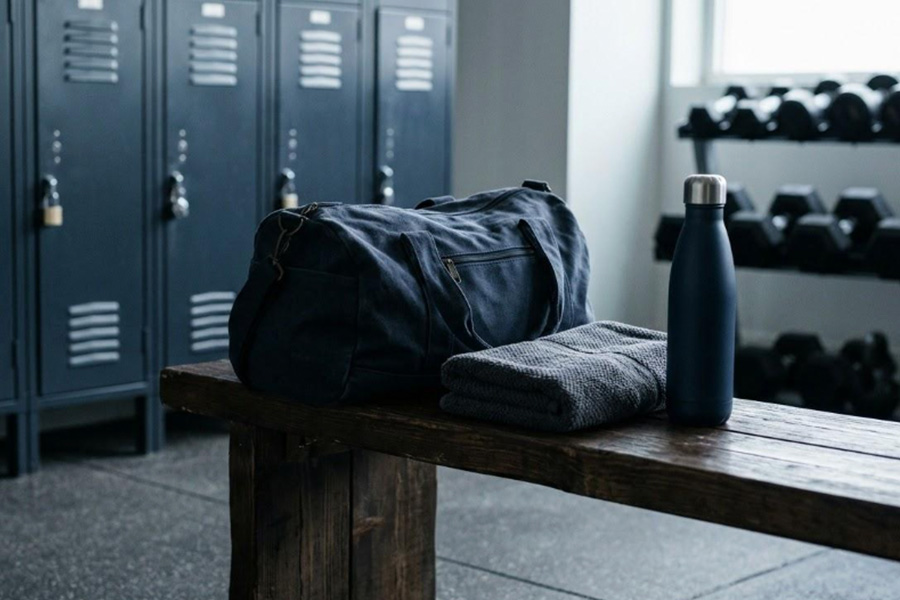
Gym bag, towel and water bottle on a bench in a quiet locker room.
Men who ask about gynecomastia surgery usually ask about the gym first. It is a fair question, and the answer is six weeks before unrestricted training. The more important question comes before that: whether the cause has been looked at. I want a medical evaluation first and a surgical plan second.
What gynecomastia is
Gynecomastia is enlargement of breast tissue in males. It can involve glandular tissue, fat or both, and it has causes that need a doctor’s attention, hormone changes among them. MedlinePlus, the National Library of Medicine’s patient resource, advises contacting a provider if you notice recent swelling, pain or enlargement in one or both breasts. The American Society of Plastic Surgeons describes it on its gynecomastia surgery page as a condition that can follow hormonal changes, heredity, obesity or the use of certain drugs, and notes that it can affect self-confidence. Surgery addresses the shape. It does not replace working out why the change happened.
How a surgeon chooses the technique
Two approaches cover most cases. In some patients liposuction alone is enough. In others liposuction is combined with excision, where glandular tissue is removed directly. The choice is made from your anatomy and from what you are a candidate for, which we assess by examination. A patient who needs excision should hear that plainly, even when liposuction alone sounds like the smaller operation.
For gynecomastia surgery our minimum age is 18.
The recovery timeline we give patients
- Week 1: time off work, about one week.
- Week 2: return to normal day-to-day activity.
- Weeks 2 to 6: activity widens gradually. Ask your surgeon what is allowed.
- Week 6: full, unrestricted physical activity.
That is the range we give our patients as of November 2026, and your own recovery can run shorter or longer. If your work is physical, plan the conversation early. A desk job and a loading dock are different problems.
Planning the gym return
The risk is training too early, usually with good intentions. A few habits help:
- Keep walking from the first days if your surgeon allows it.
- Ask for a written timeline for returning to upper-body work, since chest and arm exercises load the surgical area directly.
- Do not test the limit to see whether you can. Ask us.
- Tell your trainer the date of surgery and the date you are cleared.
No nicotine, six weeks either side
We ask for no nicotine products for six weeks before surgery and six weeks after. That includes vapes and patches. If that is a problem for you, say so at the consultation. A plan works better when it starts from the truth.
Puberty, and when enlargement persists
MedlinePlus notes that more than half of boys develop some breast enlargement during puberty, and that it often goes away within a couple of years. When enlargement continues into adulthood or appears for the first time later, it deserves an evaluation.
True gynecomastia or chest fat?
Some men carry excess fat across the chest instead of glandular breast tissue, and the two can look alike in a mirror. An examination sorts them out, and that matters because it changes the plan. It is the reason we decide the technique in person and not from a photo.
Tell your surgeon about every medicine and substance
MedlinePlus lists medicines and substances linked to breast enlargement in men. They include certain heart, heartburn, anti-anxiety and antifungal medicines, along with anabolic steroids, alcohol and marijuana. Tell your surgeon everything you take, supplements and gym products included. The list informs the evaluation.
The risks
Gynecomastia surgery carries the usual surgical risks: bleeding, infection, scarring, anesthesia risk and the chance of a revision. Results vary from person to person. A consultation is a medical conversation about your anatomy, and you can ask the same question twice.
The day itself
All of our surgery is outpatient and same-day. The anesthesia is matched to the procedure and the patient. After local anesthesia there are no special instructions. After IV sedation or general anesthesia, an adult must take you home and stay with you overnight. Ask who that person will be when you book.
Other areas men ask about
Men who ask about the chest sometimes ask about other areas as well, including the face. Each area is assessed on its own merits, and a plan for one does not commit you to a plan for another. Our For Men section covers male facial rejuvenation and male breast reduction.
Scars, honestly
Any incision leaves a scar, and where it sits depends on the technique chosen for your anatomy. Ask to see the likely location on your own chest at the consultation, and ask what the surgeon expects the scar to look like once it has matured.
What to ask at the consultation
1. What is the likely cause, and has anyone checked it?
2. Am I a candidate for liposuction alone, or for liposuction with excision?
3. Who will give the anesthesia, and what type will I have?
4. What does the recovery timeline look like for my job and my training?
5. Who will see me after surgery, and for how long?
At SY Aesthetics NYC the same team sees you from the consultation through recovery and long-term follow-up. Results vary from person to person, and we say so before surgery.
Before you book anywhere, check the surgeon’s board and the operating room using the steps in How to Choose a Board-Certified Plastic Surgeon in NYC. The Plastic Surgery Recovery Guide also lists typical recovery ranges across procedures.
For Author Bio:
Igor Burko, MD. Dr. Burko is Medical Director and lead surgeon at SY Aesthetics NYC, certified by the American Board of Plastic Surgery, with a specialty in facial rejuvenation, body contouring and aesthetic breast surgery.
He completed a five-year general surgery residency and a three-year plastic and reconstructive surgery fellowship, and is a member of the American Society of Plastic Surgeons and the American Society for Aesthetic Plastic Surgery.